
Lotta Arvidsson worked with a learning partner to gain insight into the lived reality of someone struggling with congestive heart failure. She was subsequently able to apply some of those approaches to her practice as a primary care physician.
Serena Chao found a way to visualize the setting in which her patient’s family was making decisions that relied heavily on the emergency care system. This enabled Serena to identify and implement changes in her geriatric practice to lessen the family’s reliance on emergency care.
Paul focuses his takeaways on how to build on the knowledge that Lotta and Serena gained.
Guests
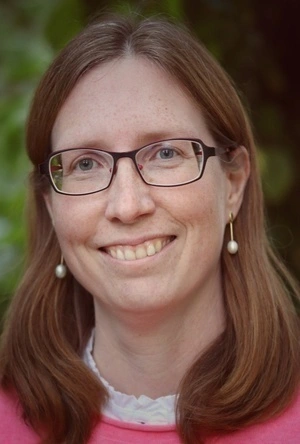
Charlotte Arvidsson
Family physician and medical educator for Region Jönköping, Sweden.
More about Charlotte
Professionally prepared as a cardiologist, Lotta has completed the additional specialty qualification as a primary care practitioner. She works as a primary healthcare professional in Region Jönköping, Sweden, and has participated in learning communities of practice for health professionals to learn how to coproduce health care. Lotta brings these insights into her daily work as a primary care practitioner and her work with a Swedish national effort to establish national guidelines for better health for people who live with heart failure. In addition, she leads the learning of Jönköping medical specialists in their ongoing efforts to gain knowledge to improve the quality and safety of healthcare.
As a participant in the first pilot group of junior doctors to work with learning partners, Lotta has gained additional insights into the lived reality of persons we sometimes call patients, and has realized the benefits of making changes to her own practice.
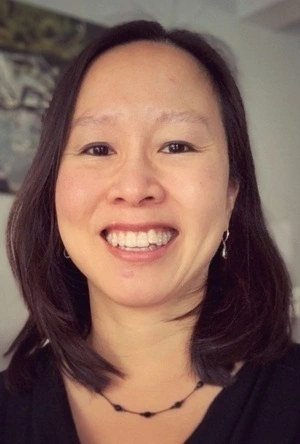
Serena Chao
MD, Chief of Geriatrics Division,Cambridge Health Alliance (CHA), Director of CHA’s House Calls Program, Co-Chair of CHA’s Post-Acute Committee and Instructor of Medicine, Harvard Medical School.
More about Serena
Serena Chao has extensive experience creating geriatrics curricula for medical students, residents and fellows. Awarded a HRSA-funded Geriatric Academic Career Award in 2007, she was a core faculty member in the design and implementation of the Boston Medical Center (BMC) Chief Resident Immersion Training (CRIT) in Geriatrics. This interactive program for rising chief medical and subspecialty residents has been replicated in at least 33 other U.S. institutions. From 2009-2015, Serena directed the BMC/BUSM Geriatric Medicine Fellowship Program and was the principal investigator of BMC’s HRSA-funded Geriatric Training Program for Physicians, Dentists, and Behavioral and Mental Health Professions. As a working group member in 2014, she helped develop milestones and evaluation tools to assess fellows’ emerging competencies in geriatric medicine. Serena was chosen as a Fellow of the American Geriatrics Society in May 2018.
She has first-hand knowledge of the ‘coproduction of healthcare service’ and wants to help others learn what she has found useful in her own work.
Supplementary materials
Reading
An illustrative description of this type of discovery was written by Richard Schiffman, “Learning to Listen to Patient’s Stories” in the February 26, 2021 issue of TheNew York Times.
A wonderful “persona-driven” frame: Vackerberg N, Levander MS, Thor J.What Is Best for Esther? Building Improvement Coaching Capacity With and for Users in Health and Social Care—A Case Study. Quality Management in Health Care: January/March 2016 – Volume 25 – Issue 1 – p 53–60 doi: 10.1097/QMH.0000000000000084
There are many ways to deepen understanding of the person who is sometimes a “patient” in healthcare service. Rita Charon, Trisha Greenhalgh and Glenn Robert are among those whose writing and resources have helped me expand and deepen my own knowledge.
Rita Charon is an internal medicine physician and a student of stories and story-telling in literature. Her book, Narrative Medicine: Honoring the Stories of Illness, published in 2006, and her more recent jointly authored text, The Principles and Practices of Narrative Medicine, published in 2017 by Oxford Univ Press, are two classics among the several she has written. Among her many peer-reviewed publications, “Narrative Medicine: A model for empathy, reflection, profession and trust” (JAMA 2001;286(15):1897-1902) is the most frequently cited. Rita has given many guest lectures and has created a graduate studies program at Columbia University, described on their website: https://sps.columbia.edu/academics/masters/narrative-medicine.
Trisha Greenhalgh is a family medicine physician and health services researcher. Her book (edited with Brian Hurwitz), Narrative Based Medicine: Dialogue and Discourse in Clinical Practice was published by BMJ Books in 1998. Trisha has many peer-reviewed publications, including “Understanding heart failure; explaining telehealth – a hermeneutic systematic review” (Greenhalgh et al. BMC Cardiovascular Disorders 2017;17:156). This article introduces a method that invites a deeper understanding of the person and nicely illustrates what can be learned by incorporating that quest into a systematic review of the literature. Trisha is currently based at Oxford University in the UK.
Glenn Robert is a health services researcher based at Kings College in London, UK. In 2007 he and his senior colleague Paul Bate wrote Bringing User Experience to Healthcare Improvement: The Concepts, Methods and Practices of Experience-Based Design. The book was published by Radcliffe-Oxford. Since then, he and his colleagues have written many peer-reviewed articles on the topic, the most frequently cited one: “Experience-Based Design: From Redesigning the System Around the Patient to Co-designing Services With the Patient.” Qual Saf Health Care 2006;15:307–310. doi: 10.1136/qshc.2005.016527. Glenn and colleagues have developed an extensive web-enabled set of resources now available under the auspices of the Point of Care Foundation at: https://www.pointofcarefoundation.org.uk/resource/experience-based-co-design-ebcd-toolkit/.
Self-study
a. Questions that might help you build more insight into the person who is sometimes known by their role as a “patient”:
- Where does the person live?
- Who does the person live with?
- What resources does the person have access to?
- Who is available to support the needs of this person?
- How does this person mobilize the resources, supports he/she has access to?
- What is a usual day, week or month like for this person? Note the variety of roles this person plays.
- Who depends on this person and under what circumstances might this become a priority?
- Who is this person dependent on and under what circumstances might this become a priority?
- What is this person proud of?
- What gives this person joy?
- What challenges, frustrations does this person have as the person navigates a usual day, week, month?
- Are there fears that this person has shared with you?
- What work does this person do? Where?
- Using your eyes, ears and other senses, what is possible to notice when meeting this person?
- How would you describe the usual setting and context in which this person lives?
- What seems to be important for this person?
b. Some methods to consider as you try to develop a deeper knowledge of this person:
- Individual Interview
- Observation
- Focus group discussion
- Working together on a shared task
- Home/other visit
c. Some approaches to synthesizing what you now know about this person:
- Imagine how you would describe this person to another person.
- Construct a profile/persona of this person.
- What is the significance of all you know as you imagine working with this person in support of health?