
Paul invites his guests, Kathryn Sabadosa and David Leach, to share a time when healthcare services worked well.
Kathryn describes the experience of her son, born 20+ years ago with Cystic Fibrosis. She describes the recent changes in the routine care for people with CF and the way together they are changing “good” care for him, and some of the ways that COVID-19 has changed her son’s interactions with professionals.
David describes his experience deciding to have heart surgery. He focuses on how he sought out the ‘person’ in the professionals he met and worked with.
After a three-way conversation, Paul offers this episode’s takeaways, focused on the importance of discovering and noticing coproduction in daily healthcare services
Guests
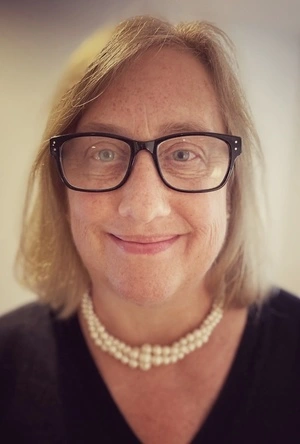
Kathryn A. Sabadosa
MPH, Director of Quality Improvement and Innovation, Cystic Fibrosis (CF) Foundation, founded by people with CF and their families.
More about Kathryn
Kathryn directs the CF Learning Network and the Learning & Leadership Collaborative, two communities for healthcare professionals, individuals with CF, and parents that test innovations in care delivery. She leads a national survey to capture and report the patient and family experience of care and disseminates the findings and quality improvement resources to 268 foundation-accredited programs in the US.
Kathy served as the senior research director for the Robert Wood Johnson Foundation Co-production of CF Care Pilot Program and as a research associate for the Northern New England Cardiovascular Disease Study Group at The Dartmouth Institute for Health Policy & Clinical Practice. She has also been an analyst and programmer at Tufts Health Plans, Harvard Pilgrim Health Care, and Blue Cross Blue Shield of Vermont. Kathy started her public health career with the Peace Corps as an associate director of maternal and child health programs in the Central African Republic and Chad. Kathy is a parent of an adult with CF.
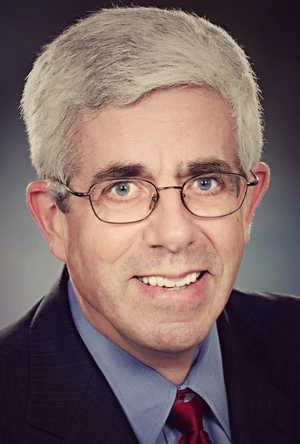
David Leach
MD, former Executive Director of the Accreditation Council for Graduate Medical Education (ACGME).
More about David
David is interested in improving healthcare by improving the formation of health professionals. As the former Executive Director of the Accreditation Council for Graduate Medical Education (ACGME), he led the development of the “General Competencies” for all medical specialties and their related graduate-level training programs in the U.S. The competencies are Patient Care, Medical Knowledge, Practice-based Learning & Improvement, Interpersonal and Communication Skills, Professionalism, Systems-based Practice. This included the development of the practical meaning of these competencies for their medical specialty.
Earlier, David practiced medicine as an Internal Medical and Clinical Endocrinology specialist at the Henry Ford Health Care System in Detroit, Michigan, U.S. He also served as the Director of Education and as the residency program director in Internal Medicine for the Henry Ford system. David has served as a member of several governing boards of health-related organizations and is currently retired.
Supplementary material
Reading
There are many 1st person accounts of coproduction that are emerging. One account from the perspective of a faculty member in a public administration program is instructive: Jeffrey D. Straussman (2020): Co-production at the front line: a user reflection on theory and practice, Public Management Review, doi: 10.1080/14719037.2020.1784635Many reports of the knowledge needed for coproduction. One example: Redman S, Greenhalgh T, Adedokun L, et al. Co-production of knowledge: the future. BMJ 2021;372:n434. doi: 10.1136/bmj.n434
Self-study
Find a learning partner and interview them.a. Some suggestions for finding a learning partner—someone with whom you could learn more about “coproducing healthcare service” and its implications The learning partner should be:
- A “different” actor than you are, but who has been a “patient-person” and who is willing to reflect with you on that experience
- A person who is curious, available, and preferably not in any direct clinical relationship with you
- A person who is engaged in the management of a long-term health challenge or who is actively engaged in “owning” their own health
b. These words may be helpful in constructing an invitation to become someone’s learning partner: I’m trying…
- To reflectively become a better leader
- To practice building useful information in some new ways
- To become a better listener
- To be a better ‘noticer’
- To better understand what it might be like to ‘walk in another person’s shoes’
- To learn how to think about ‘health’ in the way others do
- To practice thinking in different ways about health
- To better understand, practice different ways of thinking and acting for better health
- To better understand and learn how different people act on things that are important for them
- To better understand how people deal with ‘health’ issues during busy lives
- To learn how to join another person’s efforts to be as healthy as they can be
- To help me know when my questions are good ones, when they are helpful, when they are the “right ones” to let me know when you think I’m on the right track
- To be a better partner and to foster better partnerships…so I can help others lead an even healthier life
c. Explore with your learning partner a time when healthcare service worked well for each of you. Sometimes doing some thinking and writing ahead of time is a good way to prepare for this discussion.d. Reflect together on the elements of the relationships and actions that seemed to contribute to the experience